WATER BAG LOAD TEST IN QATAR
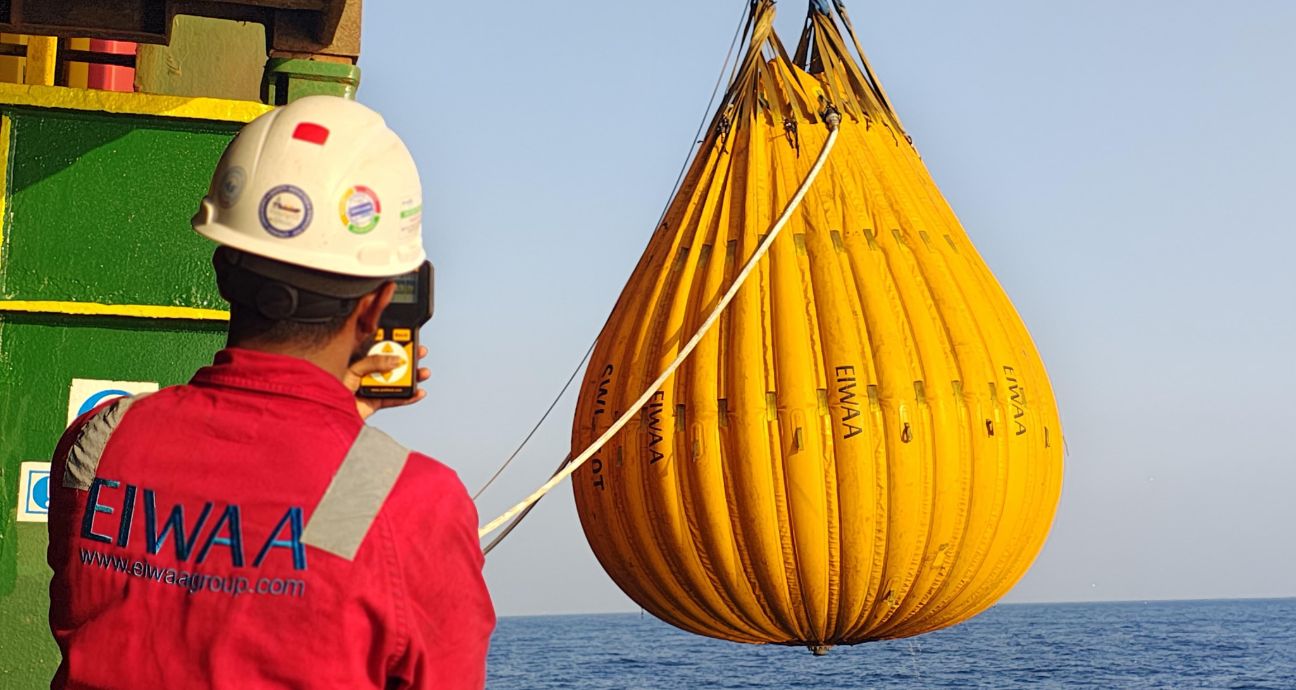
Proof load testing and health inspections are some of the offshore services offered by EIWAA for third-party crane certification and inspection. To ensure their structural integrity, cranes and other marine work equipment should undergo yearly, periodic, and five-year inspections that include pull testing, NDT examination, proof load testing, and health check monitoring. Water weight load testing services are suitable for heavy lifting and other work equipment inspection in offshore and maritime environments where solid test weights are not feasible. Ship-onboard cranes, cargo-handling cranes, provision cranes, deck cranes, jib cranes, rescue boat davit cranes, and lifeboat davit cranes are all subject to load testing and health check monitoring as part of offshore crane inspection and surveys.
Following to the criteria of the ABS, DNV, BV, LR, NK, and RINA marine classifications, cranes and equipment must be checked for safe operating loads. Most of the marine equipment that undergoes water weight load testing are cranes (main and auxiliary hooks), derrick booms, gangways, winches, launch and rescue systems (LARS), ramps, hoists, cargo grabs, lifting beams, and lifeboat release gears. Water bags and water weights allow the water to be added gradually in incremental load stages while lowering the risk of rapid overload, shock load, and structural failures.
Lifting inspection regulations and specifications for heavy lifting inspection services and pedestal crane load testing are as follows:
- API 2C: This specification concentrates on design, construction, inspection, testing, and maintenance for offshore pedestal-mounted cranes. Five years following significant repairs or modifications, whichever occurs first, cranes must pass functional and dynamic load testing as part of the lifting inspection requirement. A thorough SWL examination and health check monitoring are mandated for each year of service.
- LOLER: Prior to in-service and/or significant repair or overhaul, the Lifting Operation and Lifting Equipment Regulation of 1998 specifies the need for periodic inspection, testing, comprehensive examination, and certification by a qualified individual.
- The DNV Standard for Offshore and Platform Lifting Appliances is DNV-ST-0378. Design and proof load certification are necessary for commissioning and/or significant repairs.
- American Bureau of Shipping (ABS) Rules: An Overview of Lifting Appliance Inspection, Certification, Design, Manufacturing, and Testing with Calibrated Water Weights and Bags for Static and Dynamic Load Testing.
- Lloyd's Register (LR) Regulations: All lifting equipment and offshore cranes must go through load testing, inspection, and a thorough examination before being utilized, repaired, or altered in any way that jeopardizes the structural integrity. The LR Rules specify the requirements of the SOLAS, IMO, and LAME regulations.
- Ship RINA Classification standards: Among other things, ship, onboard, and marine crane inspections must meet RINA Class requirements. describes the working load, test load, and proof load specifications for cargo handling and transship cranes in recurring surveys.
- NK Classification Rules for Ships: Based on MSC 1/Circ 1663, TEC-1340 describes the duties, documentation, and load testing procedure requirements.
WATER WEIGHTS LOAD TESTING IN QATAR
Helideck netting systems, derricks, A-frames, davit arms, winches, cargo handling equipment, and cargo gear are all tested as part of water weight load testing services. The preparation of lifting and rigging plans is crucial to safe rigging and towing operations. Water weights are authorized and meet ABS, DNV, BV, and other ship classification requirements. Post-testing and inspection of pedestal cranes must involve nondestructive testing and NDE evaluation by EIWAA-approved class-approved NDT surveyors.