CARGO GEAR LOAD TESTING INSPECTION AND CERTIFICATION IN ANGOLA
EIWAA is one of the top Cargo Gear Load testing companies offers Cargo Gear Survey, Cargo Gear Certification and Cargo Gear Inspection at onboard ships, FPSO and vessels. We are approved by ABS, NK, RINA, BV, LR and DNV as a marine cargo gear survey service provider for cargo gear load testing and ship cargo gear survey services. Cargo gear load testing inspection and certification services are an essential component to the safe operation of lifting equipment, lifting gears and lifting appliances. As a certified service provider of major ship classification societies in Angola, our experienced lifting inspection engineers carry out annual comprehensive examinations, cargo gear survey, load testing and certification of cargo gears and appliances in ship and vessels.
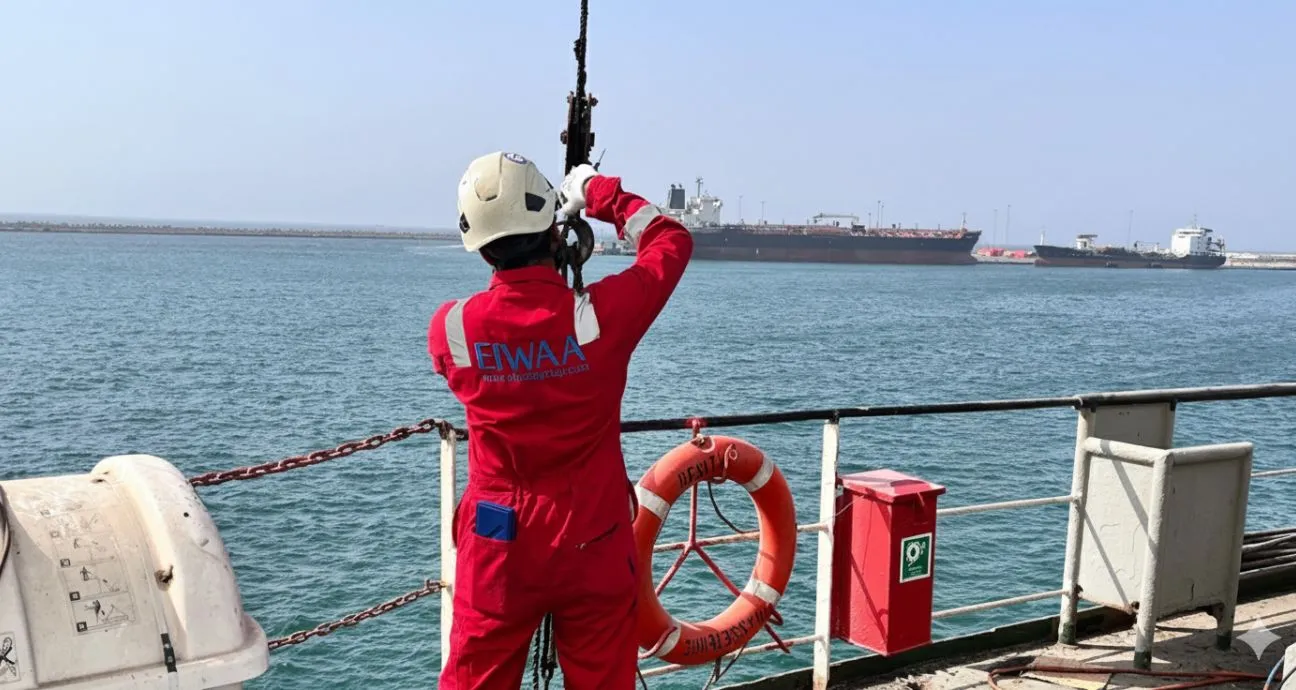
EIWAA strictly follows flag state laws and regulations. The testing and certification of cargo gear is carried out onboard by a cargo gear load testing engineer using calibrated water bags, water weights, lifting beams, slings, shackles and grommets. Cargo gear load testing requires stages of installation, yearly full inspections, periodic inspections, SWL verification by load testing, proof load testing and intermediate/visual inspection criteria.
5 YEARLY CARGO GEAR LOAD TESTING INSPECTION IN ANGOLA
EIWAA provides 5-year cargo gear load testing inspection in FPSO includes cranes, winches and hoists. The following are flag state regulations for cargo gear load testing and survey as well as ship classification rules:
- DNV ST-0377: Shipboard lifting appliances and cargo gear DNV ST-0377 defines surveys of tests, examinations, comprehensive inspections etc. for load handling devices and loose gears. Requirements and procedures include test load, load chart, incremental modifications, and lifting appliance certifications and inspections.
- IMO and SOLAS Regulation II-I/3-13 IMO and SOLAS Regulation II-I/3-13 set the safety requirements for cargo gear load testing and cargo gear survey on ships and boats.
- RINA Rules REP. 1/E Part A: Guidance on the classification of ship parts A Defines the requirements for classification and survey of cargo gears, requirements for cargo handling equipment, and criteria for testing and inspection of structural elements and their assemblies.
- LR Codes Part 3, Ch 9, Section 6: Lloyd's Register Code for Cargo Gear Inspection, Cargo Gear Testing and Certification Used in Lifting Operations in Marine Conditions. LR has a code for lifting appliances in the maritime environment for production, testing and inspection of components.
- NK standards: Machinery, cargo handling components and cargo gear are subject to a condition assessment program, routine and periodic inspections in accordance with ship classification standards.
CARGO GEAR SURVEY AND CERTIFICATION IN ANGOLA
DNV Approved Service Suppliers are third-party companies approved or recognised for conducting proof load testing, inspection and certification of cargo gears including winches, pad eyes and other lifting/testing services. EIWAA is audited and approved by DNV (Det Norske Veritas) to meet DNV standards/quality and technical requirements for shipboard inspection and marine equipment certification.
DNV-approved service providers are also hired to perform NDT and load tests and issue DNV-recognized certificates DNV-ST-0378 and DNV-ST-0358 when a port requires third-party certification of maritime cranes and lifting equipment. This certificate of load testing is acceptable for class records and flag state inspections.DNV-ST-0378 specifies certification requirements, inspection intervals, load test procedures, non-destructive testing inspections and emergency systems for offshore and platform lifting equipment.
CARGO GEAR TESTING IN ANGOLA
Load testing and NDT inspection of vessels classified by ABS . ABS Approved Service Providers in the Angola can perform a five-year crane load test and provide a report under an ABS Approval number. Load testing and certification are carried out by ABS-approved service providers: after initial installation, major repairs or modifications, change in SWL, five-year special survey and when a surveyor is required after damage.
CARGO GEAR INSPECTION IN ANGOLA
Cargo Gear load testing inspection and certification in FPSO and Offshore rigs shall be followed by following marine classification guidelines,
- DNV ST-0377 : Testing, examination, thorough inspection etc. of cargo gear and shipboard lifting appliances for load handling devices and loose gears. The requirements and procedures include test load, load charts, incremental adjustments and certifications and inspections of lifting appliances.
- RINA Regulations REP. 1/E Part A: Guidelines for classification of ship parts A establishes the requirements for classification and survey of cargo gears, the requirements for cargo handling equipment, and the requirements for testing and inspection of structural components and their assemblies.
- LR Codes Part 3 Ch 9 Section 6 Lloyd’s Register Code for the Inspection, Testing and Certification of Cranes, Derricks, Winches and Cargo Gear Used in Lifting Operations in Marine Conditions. LR has a maritime lifting appliance code for the manufacture, testing and inspection of components.
- NK standards machinery, cargo handling components and cargo gear are subject to a condition assessment programme, routine inspections and periodic inspections in accordance with ship classification standards.