INFRARED THERMOGRAPHY TESTING IN ANGOLA
Looking for thermographic inspection and survey, electrical thermal imaging, and infrared thermography testing in oil and gas as well as in the marine industry…? EIWAA is the right choice for thermography inspection and testing services for shell and tube heat exchangers, furnaces, and refractory linings. Infrared thermal imaging is used as a predictive maintenance survey for safety audits of electrical leak testing of control panels, switchboards, and panel boards for hazard and condition monitoring in ships, vessels, FPSOs, and offshore rigs.
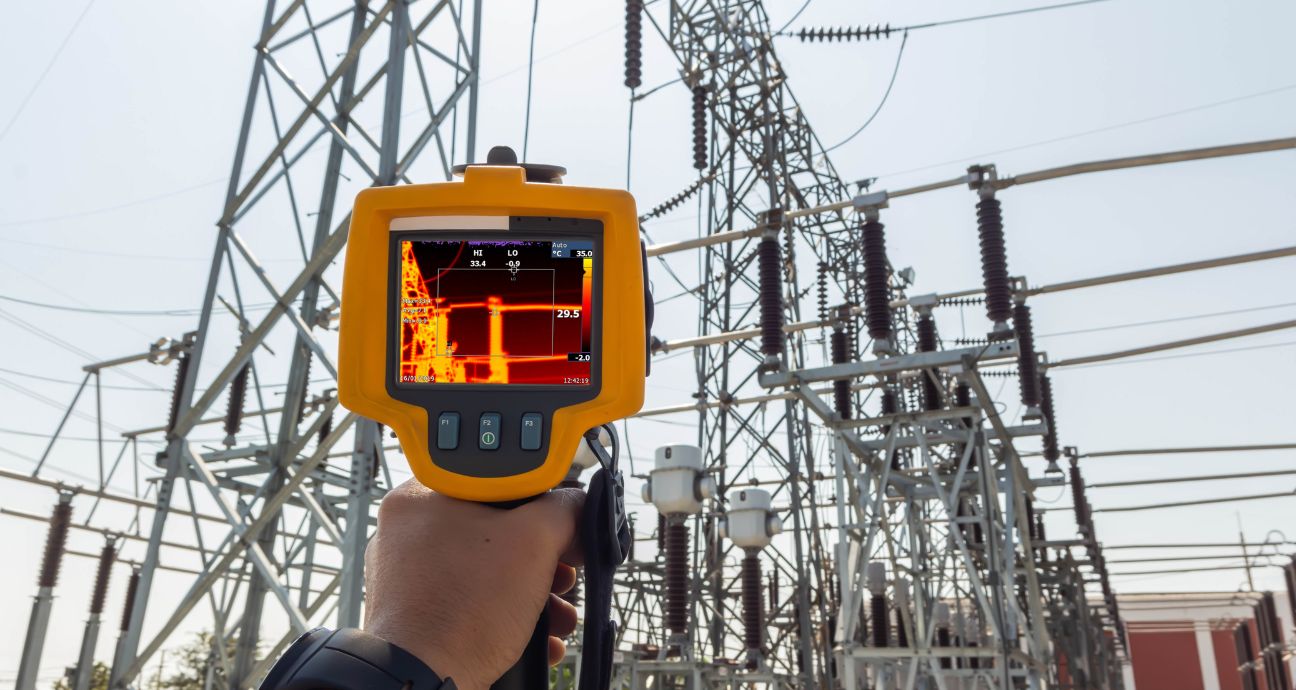
For many years, the analysis of electrical infrastructure and equipment using infrared thermal imaging (electrical thermal inspection) has probably been the most common application of infrared thermography testing. Both low-voltage and high-voltage installations can benefit from its inspection. Catastrophic equipment failures and fire incidents can be avoided by using thermography cameras to test electric transformers, overhead lines, cabinets, switches, connectors, capacitor banks, MDBs, SMDBs, DBs, and other electrical devices. Operational equipment that is at least 60% loaded should be subjected to thermography testing. We are among the best maritime and offshore providers of thermographic inspection, testing, and electrical thermal imaging for offshore sites and ships.
ELECTRICAL THERMAL IMAGING IN ANGOLA
We offer thermal scanning infrared thermography testing and thermographic imaging testing for offshore platform structures, ships, and offshore rigs, as well as thermal inspection for furnaces and shell and tube heat exchangers, by following codes and standards,
- NFPA: According to the NFPA 70B 2023 edition, every electrical appliance must have a yearly infrared examination; equipment that requires immediate replacement must have more frequent inspections.
- ISO 18434-1 and -2: International standards for collecting thermography data and interpreting images for machine system diagnostics and condition monitoring are ISO 18434-1 and -2.
- NETA: Provides suggestions for the temperature differential, or Delta T, criterion. For example, a Delta T of greater than 15°C (27°F) between similar components under load indicates a significant issue that requires immediate attention.
- ISO 18436-7: Thermographers must fulfill the requirements of ISO 18436-7, which calls for at least Level 1 certification.
FURNACE THERMOGRAPHY INSPECTION IN ANGOLA
Both low- and high-voltage electrical facilities are inspected using infrared thermography condition monitoring surveys, sometimes referred to as electrical thermal imaging. Thermal imaging is a straightforward technique for figuring out apparent temperature changes in industrial three-phase electrical circuits compared to their normal working circumstances. Technicians can quickly spot performance issues on particular legs that might be brought on by overloading or imbalance by comparing the thermal gradients of the three phases side by side.
Using thermal scanners and infrared technologies, furnace thermography, or furnace thermal imaging, is a sophisticated non-invasive method for identifying heat outputs from a variety of things. This is how infrared radiation, which is invisible to the human eye, gets converted into visible light.
ELECTRICAL CONDITION MONITORING IN ANGOLA
An essential part of industrial preventative maintenance programs is thermal imaging. Thermal imaging may greatly increase operational efficiency and safety by making it possible to identify unusual heat patterns, such as those brought on by overloads or approaching equipment failures. Minor issues can be found and fixed with infrared thermography before they worsen. Thermal patterns of electrical equipment surveys can identify a number of electrical issues that, if neglected, could result in equipment failure or a more significant electrical hazard.